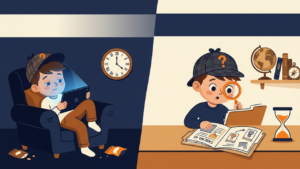
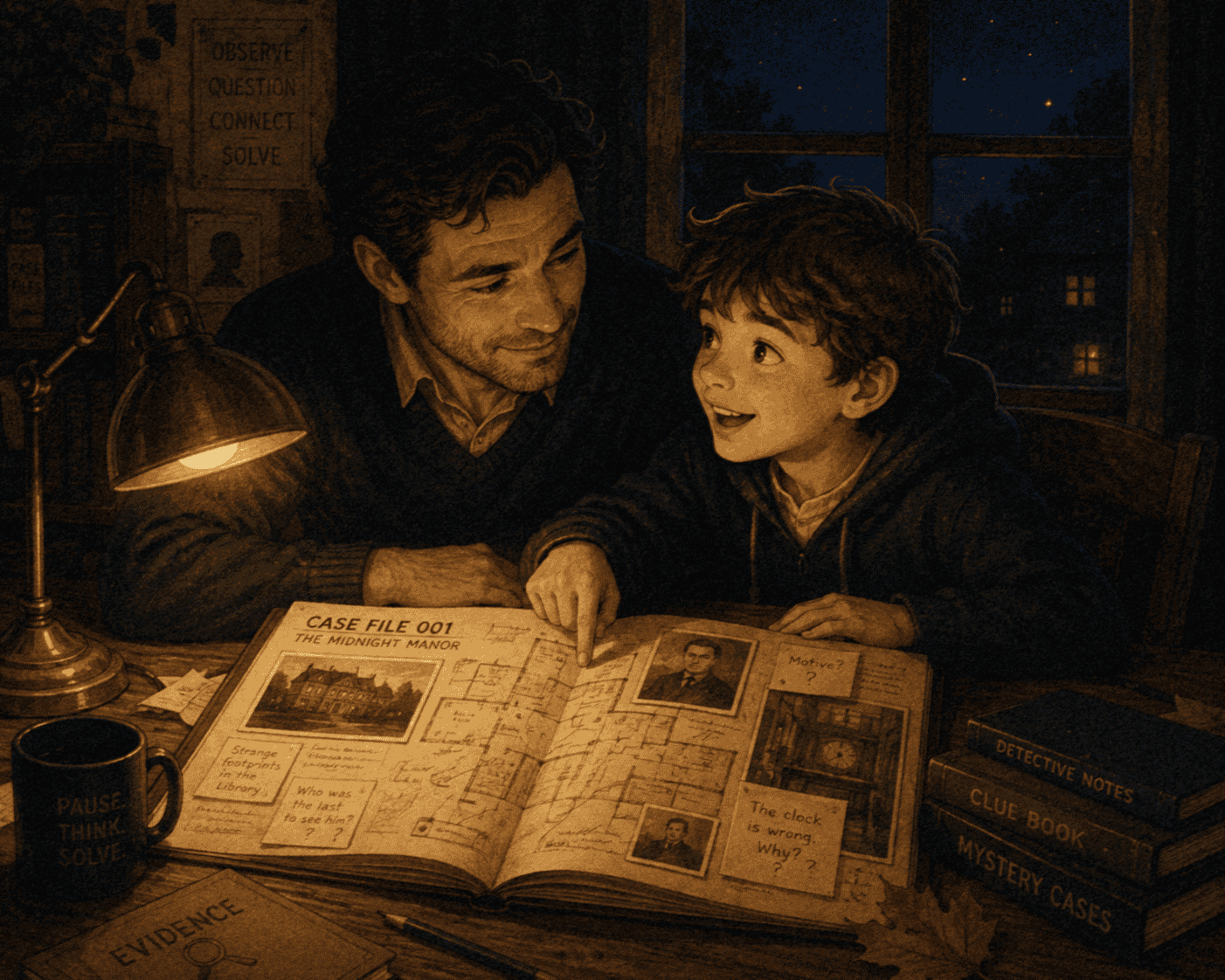
If you’re trying to replace screen time with reading and it’s not sticking, the book format might be the problem, not your kid.
If you’ve searched “mystery books for kids,” you’ve probably found the same list ten times over: Nancy Drew, Bunnicula, Chasing Vermeer, Encyclopedia Brown. All good books. All built the same way — your kid reads a story about someone else solving a mystery, then closes the book.
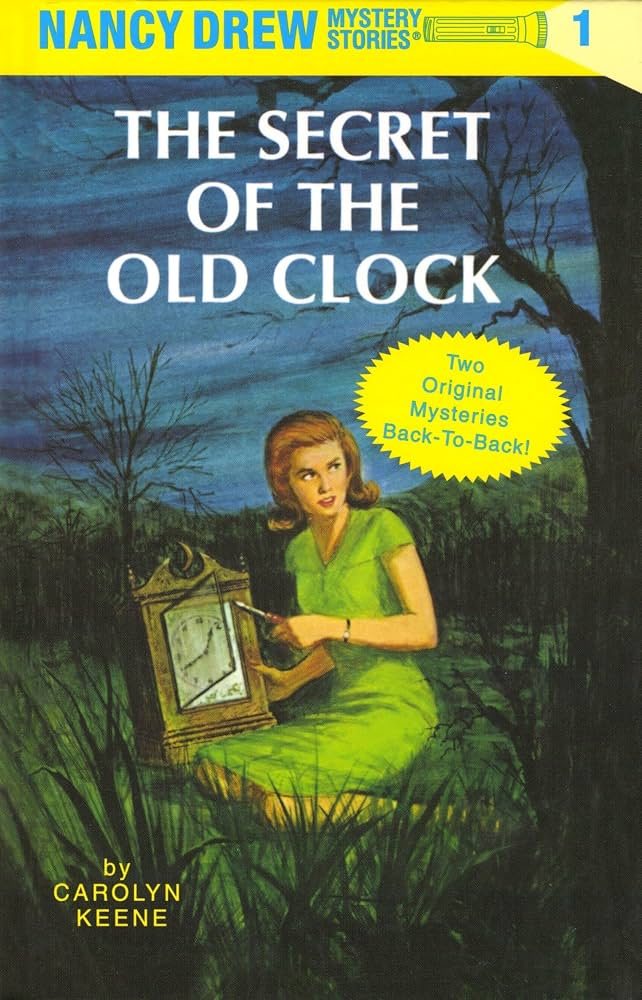
There’s a second category that rarely shows up in those lists, and it works differently: interactive mystery books, where your kid isn’t reading about a detective — they are the detective. Real clues, real suspects, real evidence to sort through, and a case they solve with their own thinking, not by turning the page to find out what Nancy Drew figured out.
If you’re choosing between the two for a child somewhere between 8 and 14, it’s worth understanding what actually changes when a kid solves instead of reads — because it’s not a small difference, and it’s often the missing piece when “just give them a book instead” hasn’t worked so far.
Reading About a Mystery vs. Solving One
A traditional mystery novel is genuinely good practice for a lot of things: vocabulary, narrative structure, sitting still with a story. But cognitively, your child is a passenger. They follow the detective’s reasoning; they don’t build their own.
An interactive mystery book flips that. The child has to weigh each clue themselves, connect evidence that doesn’t obviously fit together, and sometimes get it wrong before they get it right. That’s the entire mechanism behind what we’d call the “mental training” side of this format — not a flashy claim, just a fact about how the activity is structured. A 2026 randomized controlled trial published in Acta Psychologica found that structured puzzle play produced sustained improvements in inhibitory control and cognitive flexibility in children ages 4 to 5 over a 10-week period. A separate 2012 study in Developmental Psychology linked early puzzle play to stronger spatial reasoning at age 4½. Neither study is about mystery books specifically, and neither claims a kid gets smarter — but both point to the same underlying idea: active problem-solving play is linked to real, specific cognitive gains that passive reading doesn’t require in the same way.
There’s also a quieter benefit worth naming. A lot of what pulls kids toward a tablet or a feed is built to be low-effort and high-stimulation — content that asks nothing of them and refreshes itself before boredom sets in. Research has also linked heavy passive screen use to disrupted sleep and reduced attention, which is a separate issue from mystery books entirely, but it’s part of why a genuinely engaging low-stimulation activity matters: something has to compete for that attention, and a solved case does it without needing to be loud about it.
What to Look for in a Good Interactive Mystery Book
Not every “puzzle book” for kids is built the same way. A few things actually matter:
Real clues, not decoration Some books put “detective” in the title but the puzzles are generic word searches with a magnifying glass icon slapped on. Look for actual physical or logical clues — a map, a coded message, a timeline — that genuinely connect to solving the case, not filler activities between story pages.
Built-in hints, not a dead end This matters more for younger kids. A good detective book for a 10-year-old gives them a way to get unstuck without a parent having to solve it for them — a hint system, a secondary clue, something that keeps them moving without handing them the answer outright.
Age-appropriate difficulty, not one-size-fits-all Mystery books for kids ages 8-10 and mystery books for a 14-year-old shouldn’t ask for the same level of deduction. Look for books that explicitly design for a range (ours spans 8-14) with built-in flexibility, rather than a single fixed difficulty that’s either too easy or too frustrating depending on the kid.
A format that fits how your family actually uses it Some families want something they can print at home; others want a tablet-friendly PDF for a car ride. A detective book for kids in PDF format solves both at once — no waiting for shipping, no extra physical clutter, and you can print only what you need.
A story wrapped around the logic, not just puzzles in a row The best interactive mystery books still tell a story — a town, a cast of suspects, stakes that make the child want to know how it ends. Pure logic puzzles without a narrative tend to lose a kid’s interest halfway through; pure story without real puzzles doesn’t earn the “interactive” label at all.
Where Mystery Puzzle Files: Bay Hollow Fits In
This is the exact gap we built The Bay Hollow Files to fill. It’s five self-contained case files for kids ages 8 to 14, delivered as an instant PDF — real clues, real suspects, evidence to sort through, and built-in hints so no one gets permanently stuck. Kids write down their own theories case by case; there’s no answer key printed on the next page to peek at.
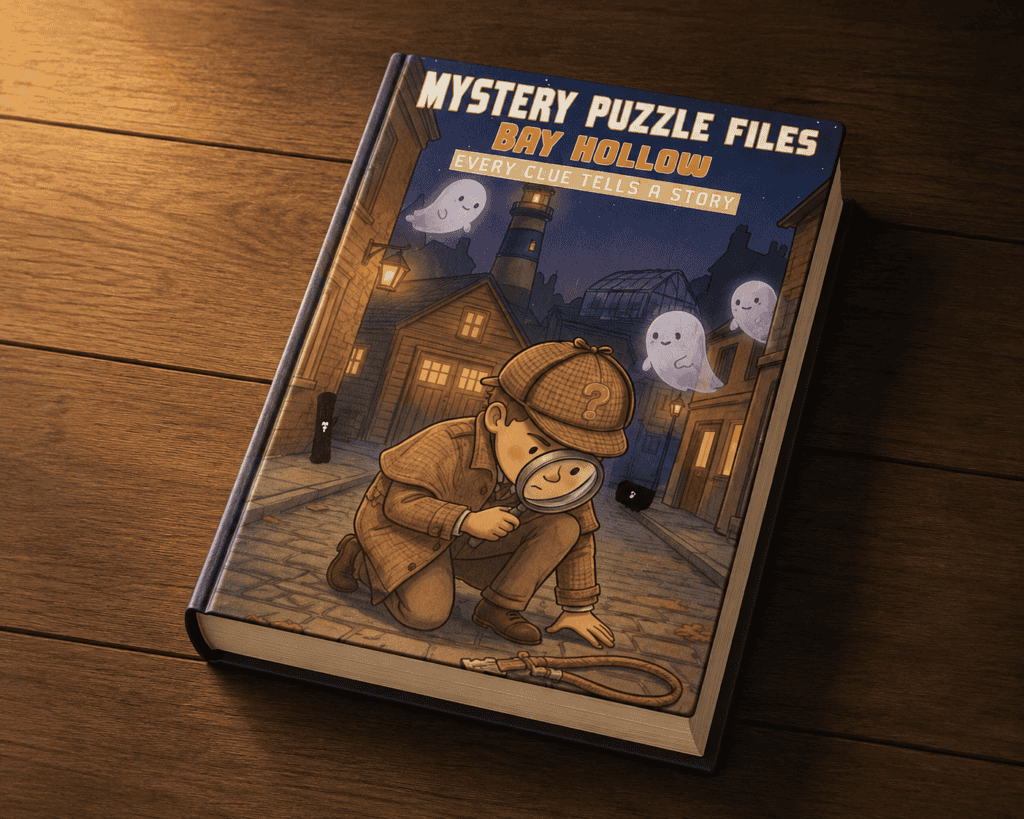
It’s not a replacement for a good mystery novel — there’s still real value in a child reading about a detective’s reasoning. It’s simply a different kind of mystery book, for the evenings when your kid wants to be the one solving the case, not just reading about someone else doing it. If your goal is specifically to replace screen time with reading, this is the format that tends to hold attention longest, because it asks something of the reader instead of just entertaining them.
Try It Before You Decide
If this sounds like a fit, you don’t have to take our word for it. We offer one full case from The Bay Hollow Files completely free — no credit card, no commitment — so you can see whether your child actually gets pulled in before deciding if the rest of the book is worth it.
FAQ
How do I replace screen time with reading?
Start with a format that asks something of the reader, not just a story to sit through. Interactive mystery books tend to work better than passive novels for this specific switch, because solving a case gives kids the same kind of “one more” pull a screen does — just pointed at the next clue instead of the next video.
Are interactive mystery books actually better than regular mystery novels?
Not “better” — different, and useful for a different goal. A regular mystery novel builds vocabulary and narrative sense. An interactive one builds active problem-solving, since the child has to reason through the case themselves instead of following along with someone else’s deduction.
What age is best for interactive mystery books?
Most are built for a range rather than one exact age, since the gap between a 8-year-old and a 14-year-old is significant. Look for books with built-in hint systems or difficulty tiers, so the same book can flex for a younger sibling or an older one.