

If you’ve ever added up your kid’s screen time for the day and felt a small wave of guilt at the number, you’re not alone — and the honest answer is that the “right” number is less clean-cut than most guidelines make it sound.
Quick answer: most pediatric guidance uses the 3-6-9-12 rule as a rough benchmark — no screens before age 3, no personal device before 6, no unsupervised internet before 9, no unrestricted social media before 12 — but past early childhood, consistency and content matter more than counting hours to the minute.
The 3-6-9-12 rule, explained
This framework, popularized by French psychiatrist Serge Tisseron and now widely referenced by pediatric groups, breaks down like this:
- No screens before age 3 — this is the age range with the strongest research consensus, since early brain development benefits most from in-person interaction.
- No personal device before 6 — shared, supervised screen time is different from a child having their own device.
- No unsupervised internet before 9 — kids this age are starting to explore online spaces, but not yet ready to navigate them without guidance.
- No unrestricted social media before 12 — this is the age where most guidance suggests kids can start handling social platforms, ideally with ongoing conversation about what they’re seeing.

Why the guidelines get vaguer after age 9
If you’ve noticed that advice for younger kids is specific (“under 1 hour a day”) and advice for a 10, 12, or 14-year-old gets vaguer, that’s not an oversight — it reflects real disagreement in the research itself. At this age, what your kid is doing on the screen (passive scrolling vs. video calling a friend vs. researching a school project) matters more than the raw number of hours, and that’s much harder to standardize into a single guideline.
What most pediatric sources agree on for kids 9 and up:
- Screens shouldn’t crowd out sleep, physical activity, or in-person time
- Consistency matters more than strictness — a clear, predictable routine tends to work better than rules that shift day to day
- What they’re doing on the screen matters as much as how long they’re on it
What to actually do with this information
Guidelines are useful for knowing roughly where you stand, but they don’t tell you what to do at 6pm when your kid wants the tablet and you’re not sure if today’s been “too much.” That’s usually where the guilt creeps in — not from the number itself, but from not having a plan for the moment.
The more useful question isn’t “is 3 hours too many,” it’s “what does my kid reach for when the answer is no.” If the honest answer is “nothing, so I just say yes,” that’s worth solving before worrying about the exact hour count.
The part guidelines don’t tell you
Here’s something worth knowing plainly: none of these guidelines were written with the same level of design behind them as the apps and platforms your kid is using. A recommendation on a pediatrician’s handout is a suggestion. A social feed is engineered, tested, and refined by teams whose job is to make it hard to put down. That mismatch is a big part of why sticking to any guideline feels harder than it should — it’s not a willpower gap, it’s an uneven fight.
Having something on hand that genuinely competes for your kid’s attention — not just a rule that gets negotiated every night — tends to matter more than getting the guideline exactly right.
If you want a real, ready alternative for the moments screen time guidelines don’t quite cover, The Bay Hollow Files gives kids a mystery to solve with real clues, no screen involved. Try one full case free, no credit card required.
What is the 3-6-9-12 rule for screen time?
A general guideline: no screens before age 3, no personal device before 6, no unsupervised internet before 9, no unrestricted social media before 12. It’s a benchmark, not a hard rule — most pediatric sources treat it as a starting point for conversation, not a strict schedule.
Is 7 hours of screen time a lot for a 10-year-old?
For most guidance, yes — that’s well above what’s typically recommended once school, sleep, physical activity, and in-person time are accounted for. The bigger question is usually what’s being displaced by that time, not just the number itself.
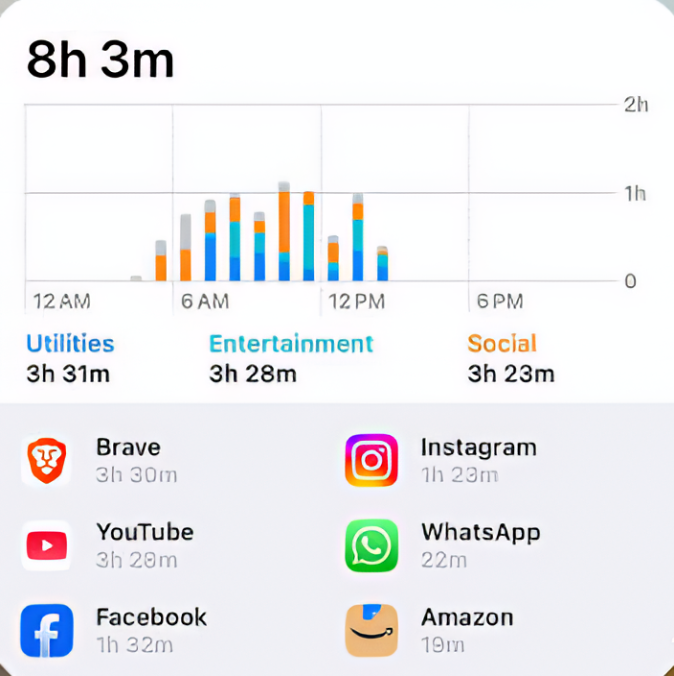
How do I calculate my kid’s screen time?