Most “screen time alternative” lists are built for toddlers — finger painting, sensory bins, letter hunts. Great advice, if your kid is three.
But if you’re raising a 9, 10, or 12-year-old, that advice falls flat. Your kid doesn’t want a sensory bin. They want something that actually competes with what’s on the screen — something with a challenge, a story, or a reason to keep going.
Here are 12 alternatives that are built for that age group specifically, not repurposed from a preschool activity list.
1. Mystery and detective puzzle books
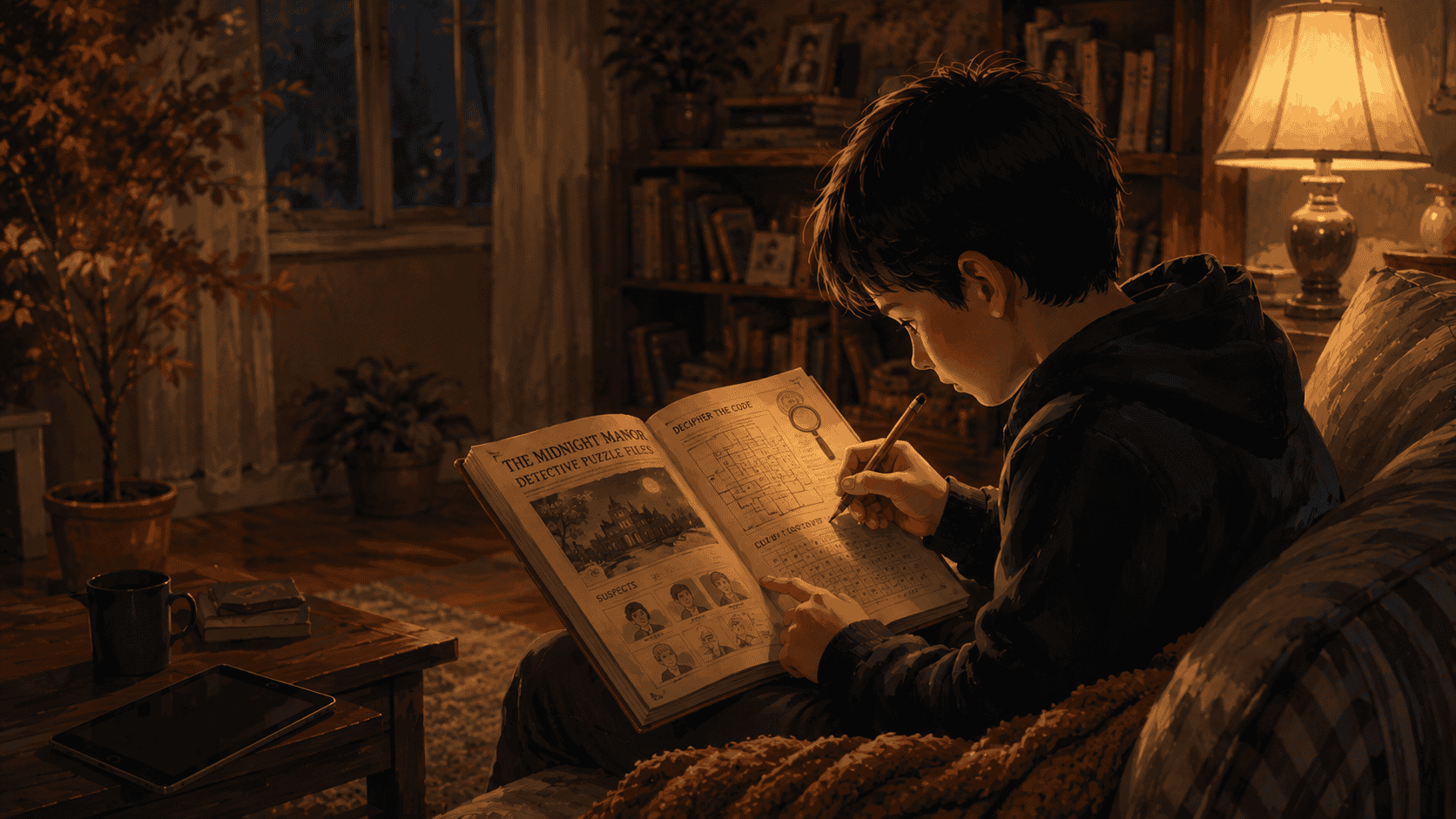
This is the one most lists skip entirely, and it’s often the most effective for this exact age range. Tweens are old enough to enjoy real logic — following clues, ruling out suspects, connecting evidence — but young enough that they still want a story wrapped around it.
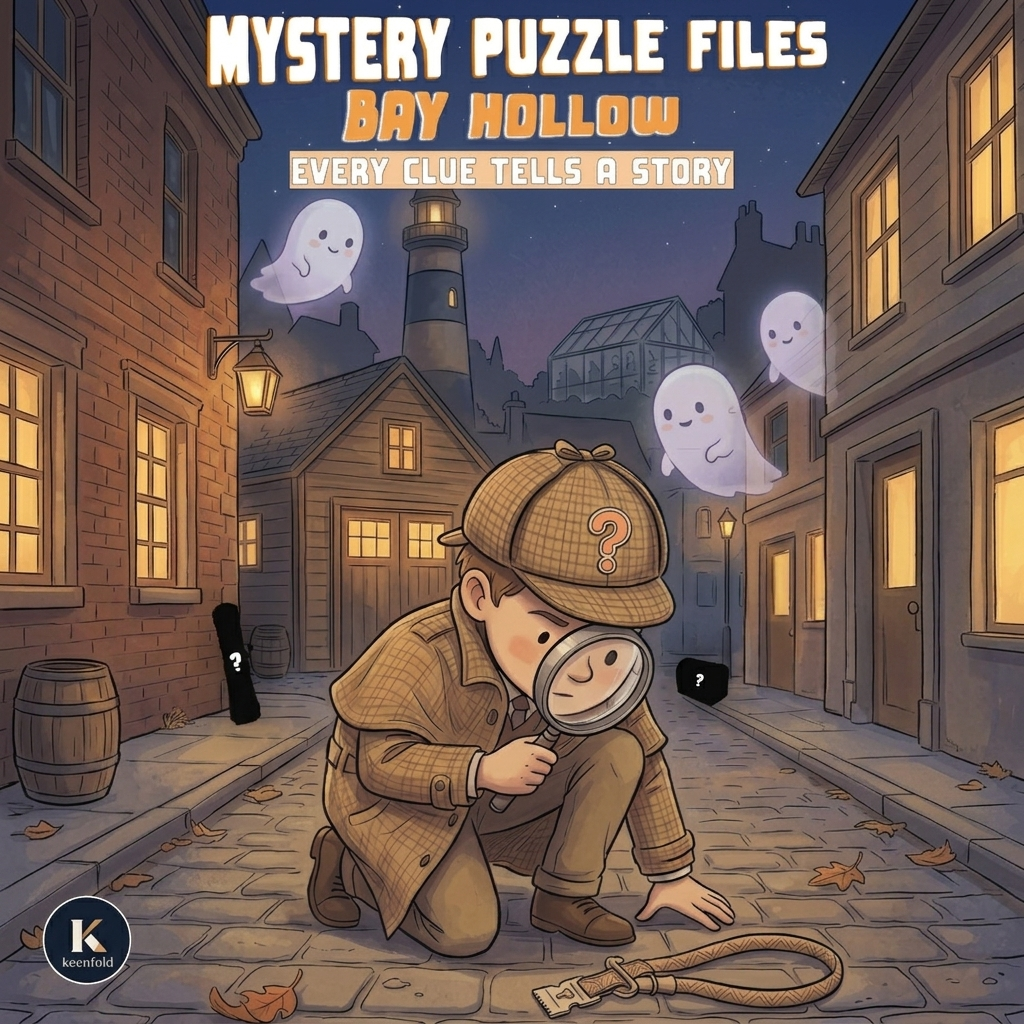
This is actually one of the reasons we built The Bay Hollow Files — a mystery puzzle book made for kids 9–14, where every case is solved with real clues, not multiple choice. No hints unless you want them, no “right answer” printed on the next page.
The research backs this up too: a 2026 randomized controlled trial published in Acta Psychologica found that preschoolers who engaged in structured puzzle play showed sustained improvements in inhibitory control and cognitive flexibility over a 10-week period. Separately, a 2012 study in Developmental Psychology linked early puzzle play to stronger spatial reasoning skills at age 4½. Neither study claims puzzles make kids smarter across the board — but they do show that this kind of focused problem-solving play is linked to real, specific cognitive gains.

2. Escape-room-style challenges at home
You don’t need to book an actual escape room. A DIY version — hide a few clues around the house that lead to a small prize — hits the same “figure it out” itch that keeps kids glued to certain apps, except they’re moving around and thinking, not scrolling.
3. Cooking one recipe start to finish
Not “helping” — actually running a simple recipe themselves, start to finish, with you supervising rather than doing it for them. Tweens respond well to real responsibility, and a finished dish is a tangible reward screens can’t offer.
4. Board games with actual strategy
Skip the games built for younger siblings. At 9–12, kids can handle real strategy games — the kind where a mistake mid-game actually matters. This is also one of the few “screen alternatives” that naturally pulls in the rest of the family.
5. A “fix-it” project
Something physical that’s slightly broken — an old bike, a squeaky drawer, a bent bike basket — with basic tools and supervision. The appeal isn’t the tool use, it’s the “I made this work again” feeling.
6. Journaling with a twist
A blank journal rarely gets used by this age group. A journal with a specific hook — a “case file” format, a one-line-a-day prompt, a comic strip layout — gets used a lot more, because it doesn’t feel like homework.
7. Building something with a deadline
LEGO, model kits, or cardboard construction — but with a self-imposed deadline (“show me by dinner”). The deadline is what makes it compelling at this age, not the materials themselves.
8. Outdoor scavenger hunts
Not a toddler nature walk — a real list with categories that require some thought (find something that proves it rained recently, find three different leaf shapes). It’s outdoor time that doesn’t feel like “go play outside.”
9. Teaching them a skill you actually have
Chess, a card game, basic photography, whatever you’re genuinely good at. Tweens are highly motivated by learning something from a parent specifically, in a way that fades quickly by the teenage years — this window doesn’t last long.
10. A “no-screen hour” with a sibling or friend, not alone
Screen time often replaces boredom, and boredom alone is a much easier trap to fall back into than boredom with another kid in the room. Two tweens left with nothing to do will often invent something themselves faster than one will.
11. Simple magic tricks
A few practiced sleight-of-hand tricks give a 9–12-year-old something to actually show off to friends and family — a rare screen-free activity with a genuine social payoff.
12. Letting them be bored, on purpose
Not a trick, not an activity — just less scheduling. Constant screen access has partly replaced the boredom that used to push kids toward inventing their own games. Removing the screen without replacing it with another activity, even for twenty minutes, sometimes does more than any structured alternative on this list.
The real goal isn’t zero screen time
None of this is about eliminating screens entirely — that’s not realistic for most families, and it’s not really the point. The goal is having two or three go-to alternatives ready for the moments when you’d otherwise hand over the tablet just to get through the next twenty minutes.
If you want to try the mystery puzzle book approach with your own kid, The Bay Hollow Files includes a free full case you can try before deciding if the whole book is worth it — no credit card required.