
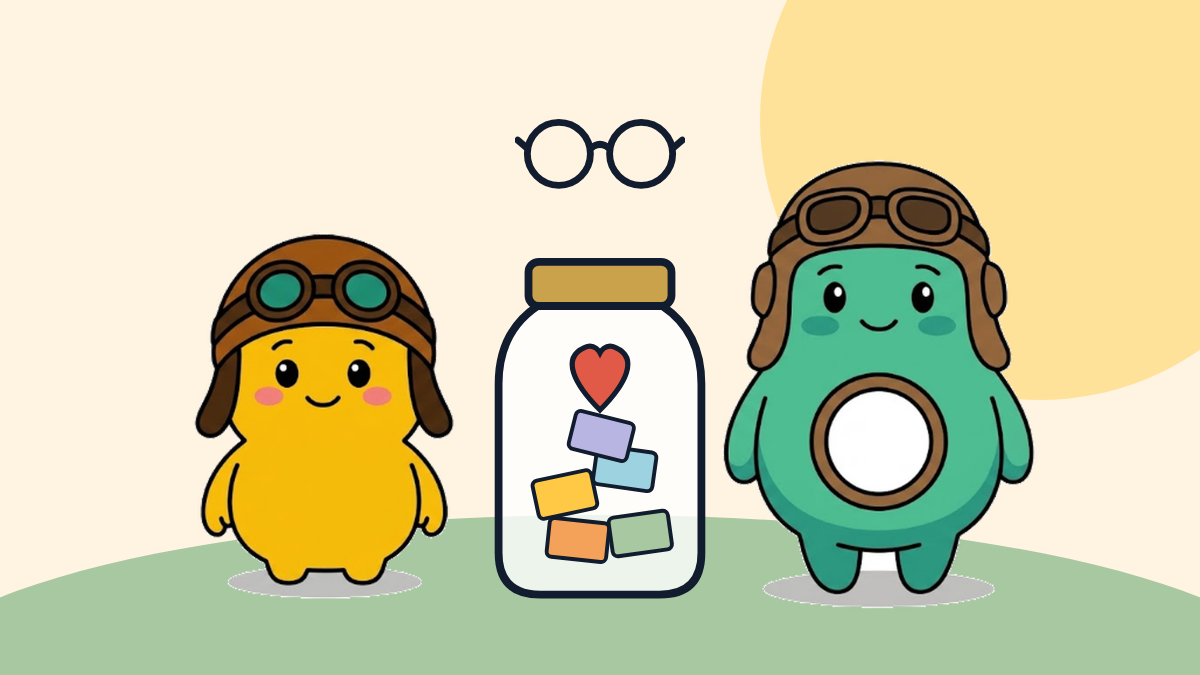
Quick answer: The gratitude activities that work best for kids ages 5 to 8 are short, hands-on, and done on a calm day: a gratitude jar, a bedtime “who gave their time for you today?” question, drawn thank-you notes, and a pause-and-notice routine for rushed thank-yous. Keep each one under five minutes, repeat it for a few days in a row, and never force the feeling.
Skip to the printable instructions · Download the free printable gratitude jar PDF directly
| At a glance | Ages 5–6 | Ages 7–8 |
|---|---|---|
| Time per activity | 1–3 minutes | 3–5 minutes |
| Gratitude jar | Draw one slip a day | Write one sentence and name who |
| Bedtime question | Answer out loud | Answer, then pick how to say thanks |
| Thank-you | Draw it | Write two lines |
| Practice | Same moment every day | Same moment, plus teach a younger child |
It’s 7:40 p.m. You just closed the bedtime book. “Thanks,” your six-year-old says, at the speed of a sneeze, already thinking about tomorrow.
You didn’t want a speech. You wanted a moment.
Nothing is wrong with your child. A thank-you is easy to say and hard to feel, because feeling it means noticing what someone did for you. Noticing is a skill, and skills are learned by practicing them, not by hearing a lecture about them.
Is teaching kids to be grateful worth five minutes a day?
Yes, and the cost is small. Here is what a child gets out of it: thank-yous that mean something, and a habit of noticing the effort behind the good things in their day.
Here is what happens without practice: nothing dramatic. “Thanks” stays a reflex, and the moments when someone gave their time slip by unseen.
There is some research behind the idea. In one study, researchers asked 221 middle-school students to list up to five things they were thankful for, for five weeks. Compared with groups that listed daily hassles or did nothing special, the grateful group reported more optimism and more satisfaction with life, and some of those differences were still there three weeks later (Greater Good Science Center summary; original study: Froh, Sefick & Emmons, 2008).
One honest caveat: studies like this mostly involve older kids, and nobody can promise a result for your child. Treat the activities below as small habits worth trying, not a guarantee. They work best when you do them together.
What is the Thankful Glasses routine?
Every activity below uses one simple routine, three steps with a gesture for each. It comes from Book 7 of our series, where Glo hands Sam a small pair of glasses:
Put them on. See what’s missing. Take them off, and Thank it.
- Put them on: make glasses with your fingers around your eyes.
- See what’s missing: look at the moment as if the good thing weren’t there. The bedroom with no story. The doorway with no one holding it. Then ask: “Who gave their time for this?”
- Take them off and Thank it: hands down. The person and the good thing were there all along. Now say thanks with a hug, a high-five, a smile, or words.
Why it works: a rushed thank-you skips the noticing. Picturing the good thing missing for a moment makes its value visible, so the thanks that follows is real. And because the whole routine is just three words with a gesture, a child can use it in a few seconds on an ordinary day.
In the story, Sam rushes it the first time too. Glo doesn’t lecture. Glo says, “Try staying a little longer this time.” That’s the whole coaching move.
What are the best gratitude activities for kids ages 5 to 8?
Pick one or two to start. Doing a few things consistently beats doing everything once.
1. Thankful Glasses on a rushed “thanks” (30 seconds)
The next time your child says “thanks” too fast, smile and make finger glasses. Say the three steps together. Stay on “See what’s missing” a little longer than feels natural.
2. The gratitude jar (2 minutes a day)
Set a jar on the table with a stack of small paper slips. Each day, your child adds one slip about something someone did for them. Ages 5–6 draw it. Ages 7–8 write one sentence and name who. On Friday, pour the slips out and read them aloud. (Free printable below.)
3. The bedtime question (1 minute)
Ask one of these, then just listen:
- “Who gave their time for you today?”
- “What did someone do for you today that you almost didn’t notice?”
No follow-up quiz, no correcting the answer.
4. Draw the thank-you (5 minutes)
Your child draws a person who did something kind for them, and draws what they did. Then they choose how to deliver the thanks: hand it over, mail it, or show it on a video call. Drawing counts as writing at this age.
5. The “who made this?” walk (10 minutes)
On a walk or at the grocery store, find five things that exist because someone gave their time: the sidewalk, the bread, the mailbox, the library book. For each one, ask “Who gave their time for this?” Younger kids point. Older kids guess the job.
6. The Thankful Glasses tracker (30 seconds)
Draw a row of glasses on a sheet of paper. Each time your child notices something they almost missed, they color one pair in. Add a line: “I said thank you by: a hug, a high-five, a smile, or my words.”
7. Pick the way you say thanks (1 minute)
Thanks doesn’t have to be words. Let your child choose: a hug, a high-five, a smile, or naming exactly what they’re grateful for. Letting your child pick keeps it from feeling like a performance.
How do you teach a child to be grateful? A 5-day plan
Five days, three to five minutes each. Do it at the same time every day, such as after lunch or right before the bedtime story.
| Day | What to do | Time |
|---|---|---|
| 1 | Show the three steps on a calm day. Make finger glasses together and say the words. No real situation yet. | 3 min |
| 2 | Use the glasses on something ordinary, like dinner: “See what’s missing… who gave their time for this?” | 3 min |
| 3 | Add the first jar slip. Ask the bedtime question. | 3 min |
| 4 | Draw the thank-you and choose how to deliver it. | 5 min |
| 5 | Ask your child to teach the glasses to a stuffed animal or a younger sibling. Then try it on one real moment today. | 5 min |
Day 5 is easy to skip, and it’s worth keeping. In research with older students, Stanford researchers found that students put in more effort when they were teaching a character than when they were learning for themselves (Stanford summary). Having your child teach the routine to a stuffed animal is a small version of the same idea.
After day 5, keep one habit. The jar or the bedtime question is enough.
What should you say when your child rushes a thank-you?
Keep it short. A big feeling needs fewer words, not more, and so does a rushed moment.
| Not that | Say this instead |
|---|---|
| “Say thank you!” | “Put them on. See what’s missing. Take them off, and Thank it.” |
| “Kids in other places would love to have your toys.” | “Who gave their time for this?” |
| “You should be more grateful.” | “What did someone do for you today that you almost didn’t notice?” |
| “Be thankful, it could be worse.” (when they’re sad) | “That sounds hard. I’m here. We can look for the good later, when you’re ready.” |
| “Say it properly!” (in front of the person) | Later, privately: “Want to try that one again, a little slower?” |
The left column isn’t wrong because your child is doing something wrong. It’s the wrong tool for the moment. Comparing your child to other kids, or using gratitude to talk them out of sadness, can backfire. Gratitude grows from curiosity and connection, not guilt.
What mistakes should you avoid when teaching gratitude?
- Teaching it mid-meltdown. You can’t teach calm in the middle of a meltdown, and the same goes for gratitude. Practice on a calm day, then use it in the moment with just the three words.
- Using it to dismiss a hard feeling. “Be grateful” is not an answer to sadness or frustration. Let the feeling be there first.
- Making it a chore. If the jar turns into a nightly fight, put it away for a few days. Five relaxed minutes beat twenty tense ones.
- Correcting the thank-you in front of the person. It teaches your child to feel embarrassed, not thankful.
How do you adjust gratitude activities for ages 5–6 and 7–8?
Ages 5–6: keep it to one minute and one action. Draw instead of write. Use the finger glasses and let them say just the last step, “Thank you for ___.”
Ages 7–8: add the “why.” Ask what the person gave up, like their time, a free afternoon or a hard effort. Let your child write two lines, choose how to deliver the thanks, and teach the routine to a younger child.
How can you use gratitude activities in your homeschool?
- Close the week with the jar. Read the slips aloud every Friday as the last thing you do together.
- Turn thank-you notes into handwriting practice. A real note to a real person is better copywork than a worksheet.
- Add a thank-you to your co-op day. Have your child thank the person who led a class or brought the snack.
- Use Thanksgiving week as the kickoff. Thanksgiving is on November 26 this year, so starting the 5-day plan the week before gives you a natural reason to practice.
Free printable gratitude jar (PDF)
Download the Gratitude Jar Slips: a printable jar label and a page of ready-to-cut slips, free, no email needed.
How to use the printable gratitude jar: print the page, cut the slips and drop them in any jar you already have. At ages 5–6, your child draws one slip a day. At ages 7–8, they write one sentence and name who it is about. Do it at the same moment every day, for example right after the bedtime book, and keep it under five minutes.
Download the free gratitude jar slips (PDF)
Want the full set? Add your email and get the Thankful Glasses Pack: the 5-day plan, the glasses tracker and a “who gave their time?” drawing page.
Gratitude activities FAQ
At what age can kids learn gratitude? There’s no single age. Most 5-year-olds can say thanks. Noticing what someone gave up for them is the part that grows with practice, usually through the early school years.
How do I get my child to say thank you without nagging? Skip the reminder before the moment (“What do we say?”). Instead, practice the Thankful Glasses on calm days, then use the three words when a rushed thanks happens.
What if my child doesn’t want to do it in the moment? That’s fine. Drop it and try again another day. The routine works best slowly, and your child chooses how to show thanks.
How often should we do gratitude activities? Once a day, under five minutes, is plenty. A short routine you keep beats a long one you drop.
Is it a problem if my child’s thank-you doesn’t feel sincere yet? No. A reflexive “thanks” is normal at this age. The practice is how it becomes real.
Keep practicing with a story
The 3 words are the easy part. Practice is what makes them stick. Book 7, The Thankful Glasses Method, teaches gratitude through a story your child will ask for again. Get Book 1 free to start.
The Thankful Glasses Method is Book 7 of 12 in the Keenfolds year: one 10-minute story a month. See all 12 skills in our life skills for kids by age checklist.
Next skill to practice at home: how to teach kids responsibility without nagging, one job at a time.
Results depend on practicing together, and no activity guarantees a particular outcome.
Written by Martín. I grew up in Chile, in school from 8 a.m. to 5 p.m. almost every day. I learned plenty of science, math and grammar. Nobody taught me how to handle anger, how to save money, how to focus, or what to do when worry takes over. I wish someone had taught me. So I made Keenfolds. I’m not a doctor or a teacher, just someone who never learned this.
Last updated: October 19, 2026.
Sources: Greater Good Science Center, “A Lesson in Thanks” · Froh, Sefick & Emmons (2008), Journal of School Psychology · Stanford Graduate School of Education, “Benefits seen for students teaching virtual pupils”