Short answer: the best homeschool curriculum is the one that matches your budget, your worldview, how much planning you can handle and how your child learns. Take the free quiz below. It takes about two minutes, asks seven questions and gives you your homeschool style, three curriculum matches and a simple daily schedule to start this week.
Homeschool curriculum styles at a glance
Most families end up in one of five styles. The quiz picks yours, but this table shows what each one means in real life.
| Style | A typical day | Prep you need | Usually fits you if |
|---|---|---|---|
| Structured & open-and-go | Open the guide, do today’s lessons, check them off | Almost none | You want a plan and fewer decisions |
| Living books | Short lessons, read-alouds, narration, time outside | Light to medium | You love reading aloud and hate worksheets |
| Hands-on, nature & arts | Projects, nature walks, art, making things | Medium to heavy | Your child learns by doing and you enjoy planning |
| Relaxed & child-led | A light routine that follows your child’s interests | Light | You are comfortable mixing resources |
| Online & self-paced | Lessons on a screen with automatic grading | Almost none | You need your hands free or want less teaching on your side |
“Which curriculum should I use?” is the wrong first question
It is 8:40 on a Monday morning. The boxes arrived last week, your daughter is already crying over page 3, and your youngest just emptied the pencil cup onto the floor. You open three browser tabs and ask a homeschool group which curriculum everyone uses. Forty people answer with forty different programs.
That is the problem with asking “what’s the best curriculum?” Every answer is right for someone else’s budget, schedule and kid. A better first move is to answer a few questions about your own family and let those answers filter the list. That is what this quiz does.
Take the quiz
Seven questions: age, yearly budget, faith-based or secular, the kind of day you want, how much planning you can do, paper or screens, and how long school should take. Nothing is stored and you do not need an email.
Homeschool Starter Quiz
Seven questions. You get your homeschool style, three curriculum matches that fit your budget, and a simple loop schedule to start this week. Free, no sign-up, nothing is stored.
Covers 12 popular complete programs plus a few add-ons for math and reading. It is a starting point, not a full review of every option.
The quiz covers 12 popular complete programs and a few add-ons for math and reading. It is a starting point, not a full review of every option. Prices were checked in November 2026 and are approximate, so confirm them on each publisher’s site before you buy.
How to read your results
You get a style, up to three matches and a sample week. Treat them as three things to try, not three things to buy today.
- Look at the style first. If it says “living books” and you picture yourself reading aloud on the couch, you are in the right place. If it makes you tired, go back and change the planning or screens answer.
- Try before you buy. Many publishers offer a free sample, a placement test or a trial month. Use them on a bad day, not a good one.
- Check the “keep in mind” note. Some matches come with a note, for example that a program has no math or that you may need to plan more than you said. That note is the useful part.
- Start with the loop schedule. It splits the day into a short daily core and a rotating set of subjects, so a missed day does not wreck the week.
Mistakes new homeschool parents make when choosing
Buying for the child you wish you had
A beautiful, planning-heavy program looks great in a box. If you also have a toddler and a part-time job, it will sit on the shelf by October. Choose for the week you will actually have.
Buying a full year at once
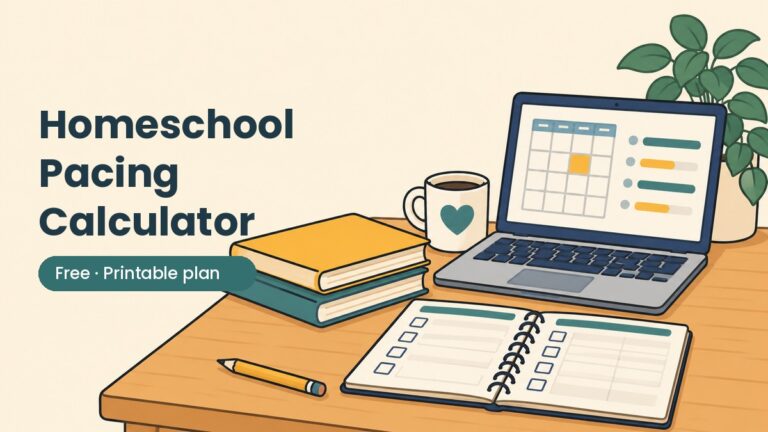
Most families change something in the first semester. Start with the core subjects, usually reading and math, and add the rest after a month. If you do buy a full year, check the pace first: the homeschool pacing calculator turns lessons left and days off into lessons per week.
Treating the first month as a test of your child
The first weeks are a test of the fit. If every lesson ends in tears, change the format, the time of day or the program before you decide the problem is the child.
Ignoring the age bracket
The right curriculum for a 4-year-old is mostly play, read-alouds and a few short activities. Formal lessons for a young child often backfire. The quiz sorts results into 3–5, 6–7 and 8–10, because the same style looks different at each age.
What changes by age
| Age | What matters most | How long school takes |
|---|---|---|
| 3–5 | Read-alouds, play, letters and numbers in short bursts | 20–60 minutes |
| 6–7 | Reading fluency, early math facts, a steady routine | 1–2 hours |
| 8–10 | Longer assignments, writing, more independent work | 2–3 hours |
Every state has its own homeschool rules about notices, records and testing. Check your state’s requirements before you pick a program, because some require specific subjects or reporting.
The part no curriculum covers
Math, reading and science are well covered by almost every program above. What a curriculum does not give you is the daily stuff: what to do when your child melts down over a lost game, spends their birthday money in five minutes or says “I can’t” about everything. Nobody taught most of us those skills either.
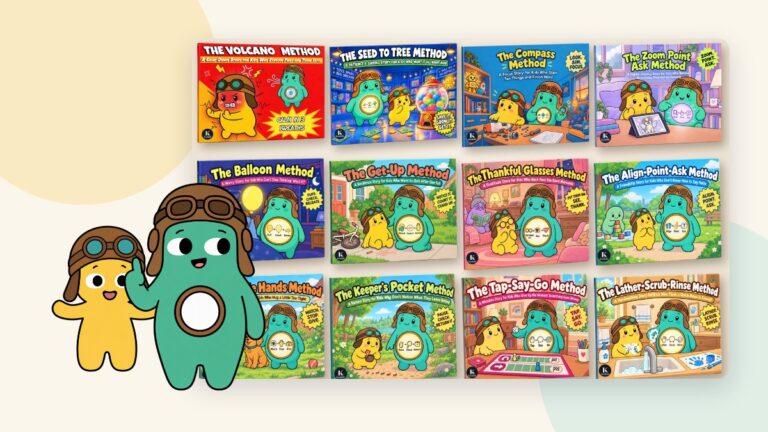
That is the gap Keenfolds was built for. It is a set of 12 illustrated stories for ages 5 to 8, one life skill per month, each with a three-word method a child can remember in the hard moment. If you want to see how it works, Book 1 is free: get Book 1 free. It is Skill 1 of 12 in the life skills for kids by age checklist.
Frequently asked questions
How do I choose a homeschool curriculum for the first time?
Start with four filters: yearly budget per child, faith-based or secular, how much planning you can do, and whether you want paper or screens. Then pick a style and try two or three samples. The quiz above applies those filters for you.
Do I need a full curriculum, or can I mix resources?
Both work. A boxed program saves decisions and suits parents who want structure. Mixing resources costs less and bends to your child but takes more planning. Many families start boxed and loosen up in year two.
What is the cheapest way to homeschool?
Free programs, the library and a few printable or low-cost workbooks cover the basics. The quiz includes free options and relaxes the budget filter only if too few programs match.
Can I switch curriculum mid-year?
Yes. It is common, especially after the first semester. Finish a natural unit if you can, keep what worked and change what did not.
Is a secular curriculum different from a faith-based one?
Secular programs leave out religious content. Faith-based programs build it into reading, history or daily lessons. The quiz filters by your answer, so you will only see programs that fit it.
Written by Martín, founder of Keenfolds. I’m not a teacher or an education expert, and no curriculum publisher pays me. I built this quiz from the questions new homeschool parents ask most often, and I’ll update it as programs and prices change. Last updated November 2026.